Five geometries
five families.
Every blade geometry tells a use, sometimes a century's worth. Here are the five families the House has chosen for its current selection.
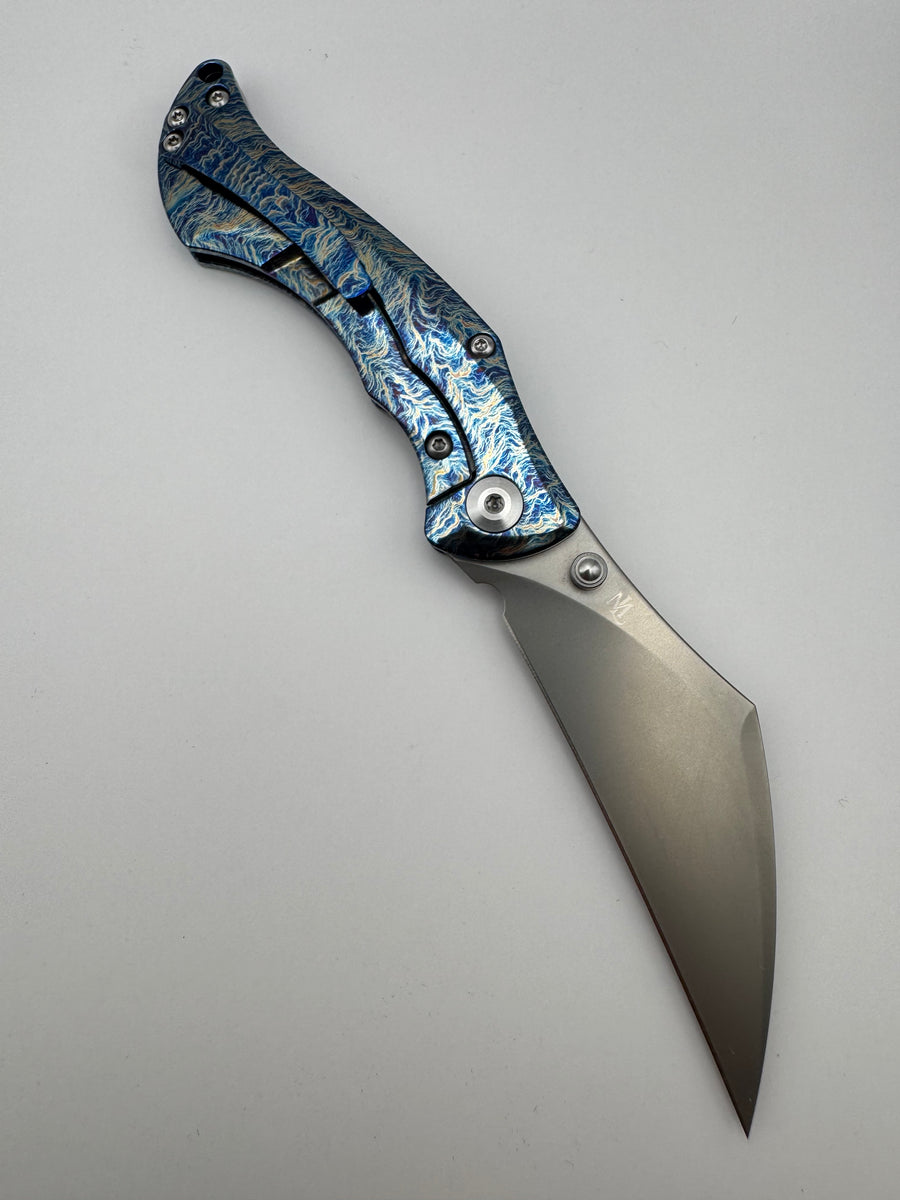
Hawkbill.
A curved, concave blade, descended from fishermen's and gardeners' knives. It pulls rather than pushes — ideal for rope, leather, and any motion that traces through material.
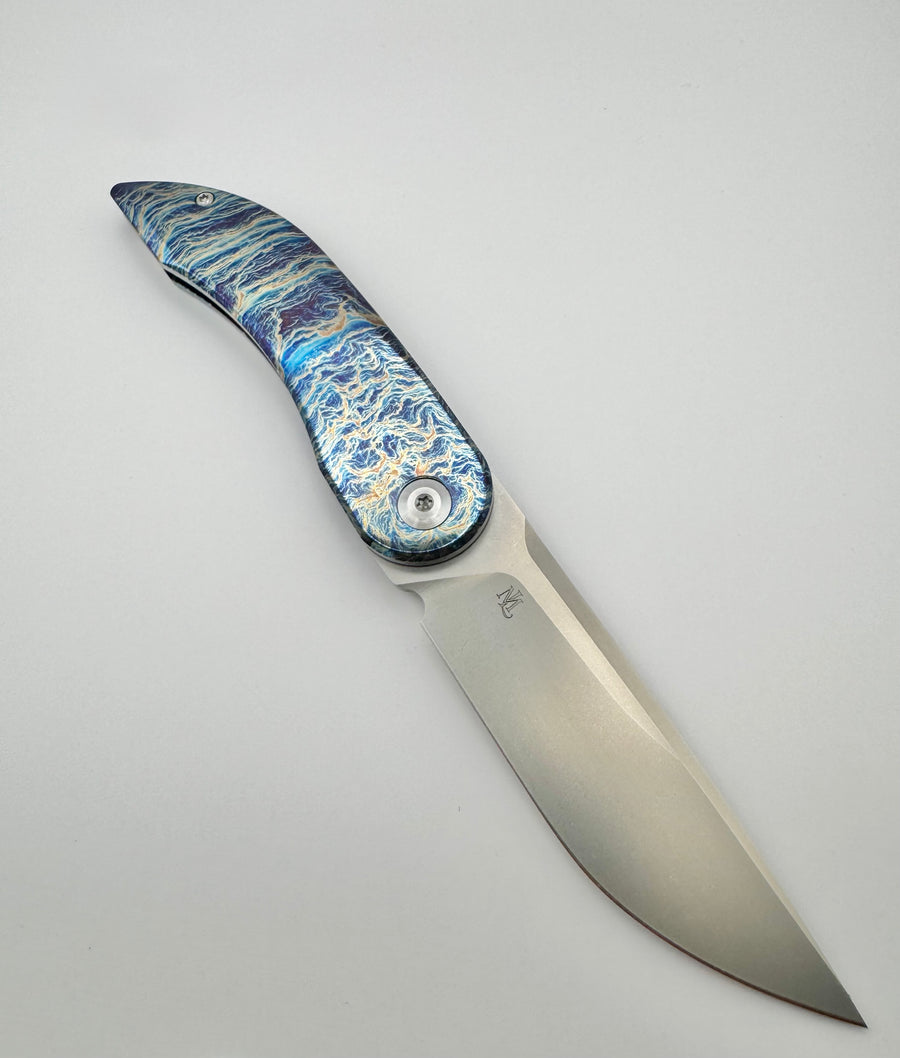
Wharncliffe.
A straight edge, with the spine dropping in a gentle slope toward the tip. The geometry of precision: what the blade sees, the blade cuts.
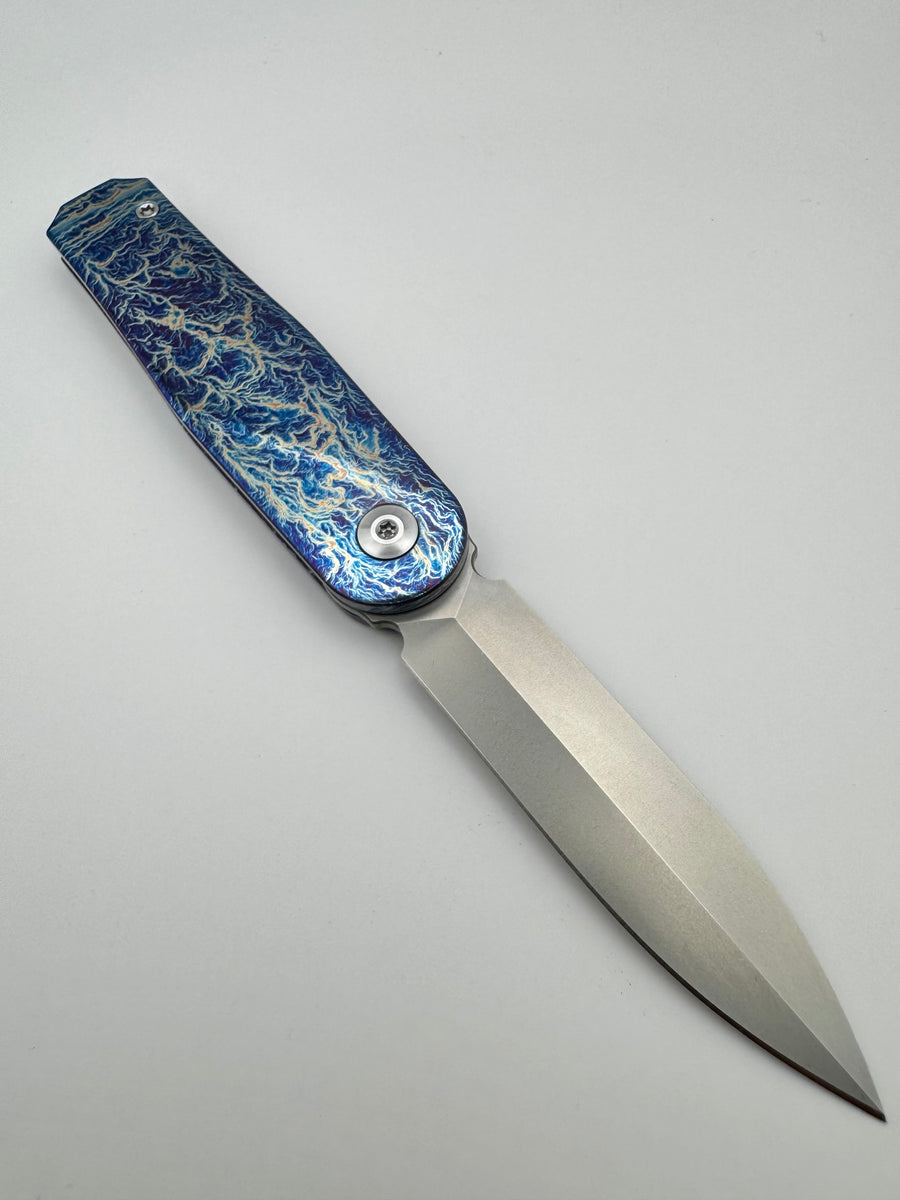
Spear point.
A symmetrical blade, spine and edge converging to a point centered on the axis. A geometry of balance, equally at ease in fine cutting and everyday use.
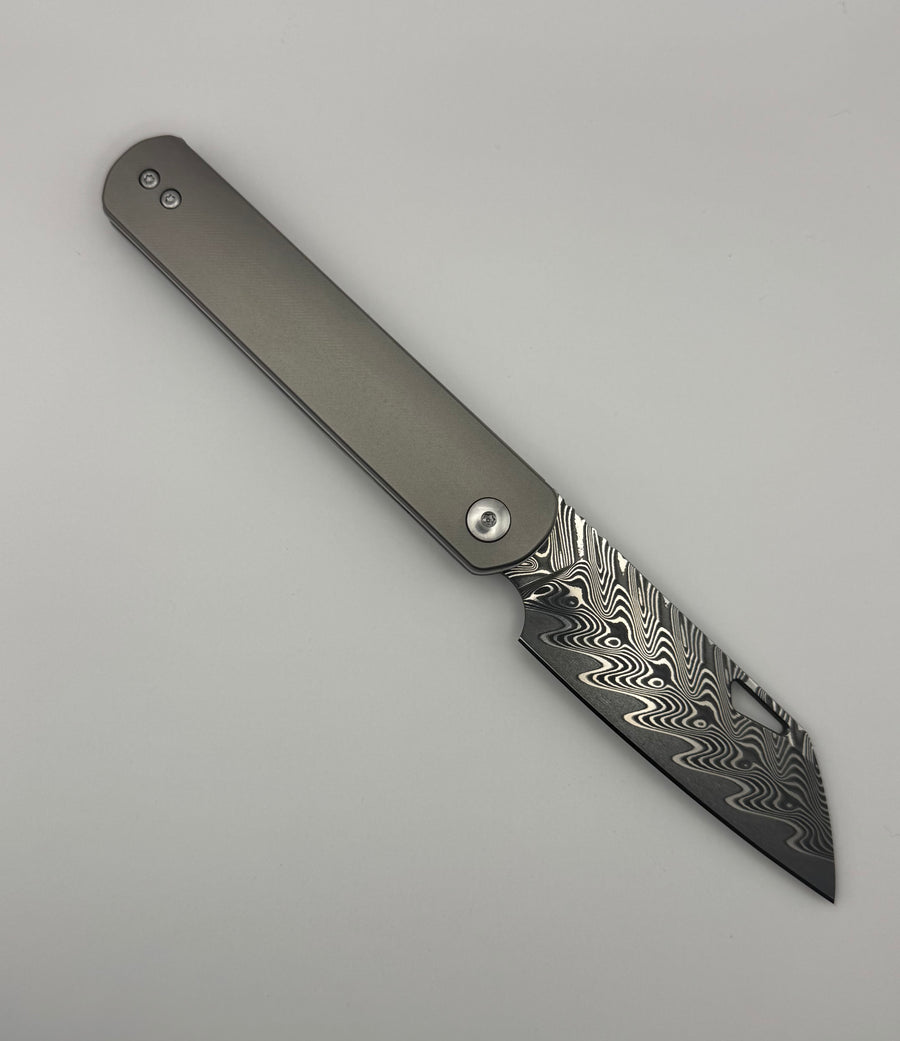
Damascus.
More than a geometry, a technique: layering then folding two steels of different hardness hundreds of times over. The final pattern isn't decorative — it's the legible signature of the forging.
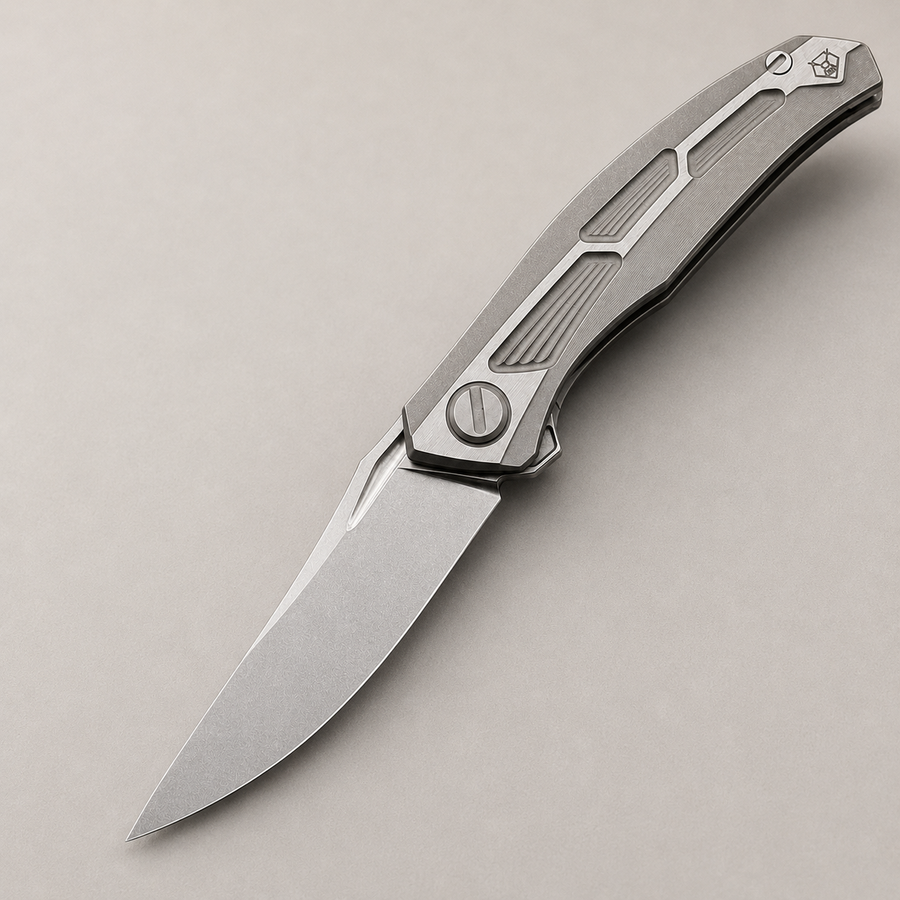
Clip point.
A straight spine along most of its length, breaking into a concave slope near the tip to form a false edge. A sharp, versatile geometry, inherited from American hunting knives — the most common blade shape on today's EDC knives.